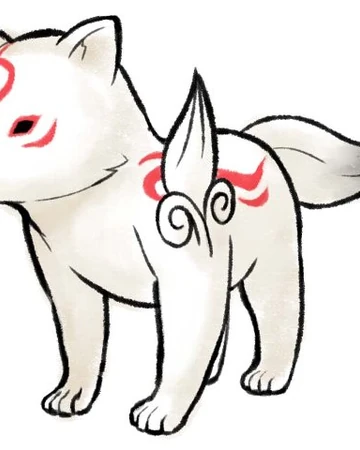
Okamiden Chibiterasu Grows Up
Bear cub grows up to be a.dog. 145 comments. Save hide report. Log in or sign up to leave a comment log in sign up. View discussions in 3 other communities. 524 points 27 days ago. I love his socks. 82 points 27 days ago.
.: September 30, 2010.: March 15, 2011.: March 17, 2011.: March 18, 2011Mode(s)Ōkamiden, known in Japan as Ōkamiden: Chiisaki Taiyō, is an published by for the. It is a spiritual successor to, a game released, at that time, for the and, but has since been ported to other platforms.Ōkamiden was designed by Kuniomi Matsushita, the director of the Wii port of Ōkami, and Motohide Eshiro, producer of. It was released in Japan on September 30, 2010, in North America on March 15, 2011 and in Europe on March 18, 2011. It stars Chibiterasu, a small celestial wolf born from, protagonist of Ōkami, and features much of the same gameplay as its predecessor, including the Celestial Brush which allows players to freeze the gameplay and draw shapes or patterns using the touch screen.Development began when Matsushita expressed an interest in creating a new Ōkami game, and showed Eshiro a technical demo of such a game in December 2008. Because the demo was so well-done, development began on a sequel, and on September 2010, four years after Ōkami debuted, the game was released to positive reviews from critics and moderate commercial success.
Contents.Gameplay Ōkamiden plays similarly to its predecessor, Ōkami, as an similar to games from series; Zelda was an inspiration for both Ōkami 's director Hideki Kamiya and Ōkamiden 's producer Motohide Eshiro. The 'Celestial Brush', the ability to freeze the screen and draw symbols via the touchscreen with the stylus to bring changes on the game's world, remains central to the game for solving puzzles and fighting enemies. The theme of returning life to the world also returns from Ōkami. A new feature is the ability for Chibiterasu to team up with partners. They can be used to explore the overworld with, as well as battle enemies. The new Guidance technique, also called the 'Shirabe' or 'courage' brush by Daniel Feit of, may be used to move Chibiterasu's partner independently across areas Chibiterasu cannot cross; this is often required to progress in the game.
The game uses the face buttons to move Chibiterasu about the world, with the top display being the current third-person view and the bottom showing a mini-map of the area. By pressing either shoulder button, the Celestial Brush is activated: the game pauses as the top screen is moved down to the bottom and rendered as a parchment, and the player then can use the stylus and touchscreen to draw to activate various powers of the Celestial Brush. The game will sense the speed at which the player draws the stylus across the screen and reflect this in the weight of the stroke drawn on-screen; a quick motion will lead to a faint, partial line while slow movements will create bold strokes.Brush techniques can also be used to defeat enemies. Many enemies are weak to one specific brush technique, and by defeating the enemy in this manner, the player can earn rare items that help to upgrade Chibiterasu's power.Some sections of the game include based on other genres, such as. The Celestial Brush returns in Ōkamiden, allowing players to interact with the game's world by drawing on the DS' touch screen to evoke special magic such as plant restoration.Much of Ōkamiden 's story centers around the children of previous characters from Ōkami and their adventures and the relationships that form through the game's story, according to producer Motohide Eshiro. The game takes place nine months after the events of.
In spite of Amaterasu's battle against the Dark Lord Yami, which would kill all the demons in Nippon, they return. The Konohana Sprite Sakuya, a character from the original Ōkami, summons the Sun Goddess Amaterasu, but instead finds Chibiterasu, who looks like a young version of Amaterasu. Chibiterasu, as revealed by Matsushita, is, in fact, Amaterasu's child/son, as was previously speculated.
Producer Eshiro noted that he is a 'young form of existence' and not fully grown; he retains several abilities of Amaterasu, including the Celestial Brush, but lacks her power, which will be reflected in the plot and gameplay. Matsushita also called Chibiterasu clumsy and having childlike traits of 'being tearfully sentimental or not being able to make decisions'.Issun, Amaterasu's partner in the first game, is unavailable to help Chibiterasu as he is busy with his duties as the Celestial Envoy, and thus Chibiterasu is tasked to find other partners to help rid the world of evil. One of the partners that accompanies Chibiterasu is ( クニヌシ, Kuninushi) the adopted son of Susano and Kushi, two characters from Ōkami. — Motohide Eshiro, April 21, 2010Eshiro further commented that he considered Ōkamiden more of a successor to Ōkami than a sequel, desiring to build upon the world for a franchise on the Nintendo DS platform. While Ōkamiden is a DS title, Eshiro has considered to expand subsequent games to work with the unit based on the game's reception.
Similarly, Eshiro does not rule out a high-definition version on a modern console or a version for the or similar touch-screen devices depending on the response to Ōkamiden.Several changes were made to the basic elements of Ōkami to make Ōkamiden suitable for the Nintendo DS. With fewer controls on the DS unit, the player only controls the movement of the characters in the game, with the camera set in an 'on rails' manner to make sure the player was focused on the right areas to head towards.
One change made from Ōkami was the simplification of the combat system, a factor that some players had found difficult; Ōkamiden reduces the melee weapon attack features down to a single button, but the Celestial Brush can still be used alongside this for complex strategy. While the developers could have removed the melee attacks completely, allowing the player to defeat enemies with the Celestial Brush alone, they felt that the lack of melee attacks slowed down the game, instead opting for players to melee and then finish off foes with a Celestial Brush flourish. The idea of partners and using the stylus to guide them came about through wanting to have more puzzles in the game that incorporated use of the DS touchscreen. While there were many more Celestial Brush strokes and other puzzles the team wanted to add, they left them out in the final version feeling they added too much padding to the game. The number of polygons and the resolution of the artwork was significantly limited on the DS version, challenging the artists to convey similar imagery and emotions that were in the first game.The game was originally going to feature Amaterasu, the protagonist goddess-wolf character from Ōkami; during character planning, one of the artists drew what Amaterasu's child would look like as a joke, but this spurred several ideas for Matsushita, such as the concept of a partner, and leading to Chibiterasu becoming the main character.
As Chibiterasu was still a child, the team thought 'it would take more than a child to save the world', according to Matsushita, and led to the inclusion of partners both in the game's story and gameplay. This option was selected over several arrangements of characters, such as having five different Chibiterasus team up as a party.
Using a story taken from a child's point of view as they explore and learn new things made the game much easier to visualize, according to Eshiro; he compared this to the movie. Eshiro also felt it was important to include making friends and having to say goodbye as part of this adventure, striking a strong emotional aspect to the game. As such, Chibiterasu is only paired with one partner at any one time, as Matsushita stated, 'if you could switch between them any time you wanted, then they wouldn't be partners anymore'. Included was the death of one of the major characters in the game, which Matsushita found necessary to improve the story's flow; the developers had looked to Ōkami and noted while characters also died there, they did not have any emotional attachment for the player, and there was resistance in the development team to have a major character die in Ōkamiden, but it was ultimately decided to do this for the betterment of the story.The game's story takes place nine months after the events of Ōkami, which posed story problems for Yukinori Kitajima, the game's main script writer. The team originally thought to take the game several years in the future, but found by keeping a closer time frame, things would not change as much from the previous game, giving a familiar feeling to those that played Ōkami.
Kitajima had to create rationales for some events, such as the reason why none of the characters remember the end of Ōkami, or why Susano's son Kuni is a young boy when, during Ōkami, he didn't even exist.Ōkamiden was first shown in playable form at the in September 2009 where it was reported to be about 25% completed. Release in Western markets was uncertain until it was observed that Capcom had trademarked the name Ōkamiden in both North America and European markets. In April 2010, at its 'Captivate' event, Capcom confirmed the game would be released to North American and European markets no later than 2011. Promotion A 'Collector's Edition' of Ōkamiden was released in Japan alongside the normal game; in addition to the game this version includes a soundtrack, DVD, storybook, a plush Chibiterasu key chain, and Ōkamiden-marked earphones. A series of television advertisements in Japan for Ōkamiden feature model and a white puppy named Moran-chan that bears a close resemblance to Chibiterasu. North American pre-order bonuses included an Ōkamiden-stylized screen cleaner and brush-shaped stylus at and a plush Chibiterasu key chain (from the Japanese collector's edition) at the Capcom Store.
Reception Pre-release. The protagonist of Ōkamiden, Chibiterasu, has received significant media attention for his appearance.The decision to put Ōkamiden on the Nintendo DS has received mixed reactions. Editor John Funk stated that it was the perfect platform for the sequel, due to how the touch screen could be used effectively for the Celestial Brush. Kombo editor Daniel Sims praised Ōkamiden 's cel-shaded visuals, stating that they work well on the Nintendo DS. Editor Hamza Aziz believed it was perfect for the Nintendo DS.
Aziz added that he was impressed with Capcom managing to retain Ōkami 's stylized appearance in the sequel. Siliconera editor Ishaan Sahdev, however, was skeptical that Ōkamiden could replicate the feel that Ōkami provided, due to how much it relied on its visuals and art style to bring players into its world.
He also criticized the reasoning behind placing it on the Nintendo DS, which was to reach a larger audience, calling the visuals terrible. He later questioned whether its faults may hurt it enough that the project may not even have been worth it. Editor Luke Plunkett expressed disappointment that it was a Nintendo DS game rather than a PlayStation 3 game.There has been skepticism about developing Ōkamiden without, a developer featuring key members of, including Hideki Kamiya, the developer behind Ōkami. Editor John Constantine worried about this, questioning whether the lack of Kamiya and PlatinumGames would make the game feel like a rehash.Demos of Ōkamiden, both of the Japanese version at the Tokyo Game Show in 2009 and the English-language version at various events in the United States was positively received by critics. Editors Stephan Totilo and Brian Crecente praised the demo versions they played in April and May 2010; Totilo considered the game a strong match for the DS and was not only 'a kind of game made for the DS' but also 'the kind of game for which he thought the DS was made', while Crecente believed that the drawing mechanism from Ōkami worked even better in Ōkamiden due to the use of the stylus and the nature of holding the portable console like a book. Daniel Feit of believed that while the graphics were not as good as the original game on the PlayStation 2, the 'cartoony graphics are well suited to the Nintendo DS'.described the character of Chibiterasu as 'adorable'. Destructoid editor Jim Sterling concurred, joking that its cuteness would make Ōkamiden one of the greatest Nintendo DS games ever made.
Luke Plunkett commented that despite his reservations for Ōkamiden, his 'heart melted' when he saw Chibiterasu.During Ōkamiden received a great deal of praise and awards from news outlets. It was nominated for 'Best Handheld Game' for the, and 'Best DS Game'. Named it their 'DS Game of Show'. Release ReceptionAggregate scoreAggregatorScore82/100Review scoresPublicationScore8/108.75/108.5/10rated Ōkamiden a total score of 34 out of 40 points. The reviewers praised the ability to bring in the elements of Ōkami to the DS, but noted that there was little surprise as there was with Ōkami as the DS version covers many of the same elements of story and gameplay. The Famitsu reviewers did note that the gameplay was not expanded far from the original Ōkami, but posit that it 'just shows how complete a package was in the first place.'
There might be others, I don't remember). Umineko golden fantasia princess modern.
Ōkamiden was the third best-selling video game in Japan during its release week at 84,472 copies sold. The game sold an additional 12,829 copies the following week, dropping to number 13 on the charts. GameZone gave the game a 7/10, stating: 'There are some players who will undoubtedly love Ōkamiden, either because the flaws (such as backtracking) are not as familiar or because they have the capacity to overlook its myriad mistakes. I wish I could do the same.' . Products Consumer Games (in Japanese). Mobile & Game Studio, Inc.
Retrieved 2011-10-13. Retrieved 2010-11-02. ^.
Retrieved 2010-06-24. Retrieved 2011-03-15. Yin-Poole, Wesley (2010-11-02). Retrieved 2010-11-02. Totilo, Stephen (10 October 2006). Retrieved 10 August 2007.
Glasser, AJ (2010-10-15). Archived from on 2010-10-18.
Retrieved 2010-10-15. ^. Retrieved 2009-09-01. Ishaan (2009-09-20). Retrieved 2009-09-20.
^ Feit, Daniel (2009-09-29). Retrieved 2010-05-19. Chester, Nick (2010-04-20). Retrieved 2010-04-20.
^ Lee, Garnett (2010-04-21). Retrieved 2010-04-21. ^ Saltzman, Marc (2011-02-21).
Retrieved 2011-02-21. ^ Spenser (2010-08-06).
Retrieved 2010-08-07. ^ Narcisse, Evan (2011-01-05). Retrieved 2011-01-05.
^ Vore, Bryan (March 2011). P. 96. Ishaan (2011-01-07). Retrieved 2011-01-09. Laura (2010-12-03). Retrieved 2011-01-31. Retrieved 2009-09-03.
^ Ashcroft, Brian (2009-09-01). Retrieved 2009-09-01.
Archived from on March 18, 2008. Retrieved 2009-09-03. Magrino, Tom (2008-03-03). Retrieved 2009-09-13.
Retrieved 2009-09-03. Constantine, John (2009-08-25). Retrieved 2009-08-25.
Tanaka, John (2009-09-01). Retrieved 2009-09-01. Retrieved 2009-09-26.
^ Dillard, Corbie (2010-06-21). Nintendo Life.
Retrieved 2010-06-21. Yin-Poole, Wesley (2010-09-30). Retrieved 2010-09-30. Crecente, Brian (2010-04-21). Retrieved 2010-04-21.
Spensor (2010-04-22). Retrieved 2010-04-22. ^ Gifford, Kevin (2010-09-21). Retrieved 2010-09-21.
^. Retrieved 2009-09-02. Funk, John (2010-02-19). Retrieved 2010-02-19.
Lee, Garnett (2010-04-20). Retrieved 2010-04-20. Plunkett, Luke (2010-07-15). Retrieved 2010-07-15. Canoli, Eric (2010-09-30). Game Set Watch.
Retrieved 2010-09-30. Funk, John (2010-09-27). Retrieved 2010-09-30. Retrieved 2009-09-01. Retrieved 2009-09-01. ^. Retrieved 2009-09-01.
^. Retrieved 2009-09-03. Retrieved 2009-09-03. Crecente, Brian (2010-04-23). Retrieved 2010-05-19.
Totilo, Stephan (2010-05-19). Retrieved 2010-05-19. Retrieved 2009-09-01. Retrieved 2009-09-02. Snider, Mike (2010-06-29). Retrieved 2010-06-30.
Retrieved 2010-06-30. Retrieved 2010-06-30. Retrieved 2011-03-14. Schilling, Chris (2011-03-14). Retrieved 2011-03-14. Drake, Audrey (2011-03-14).
Retrieved 2011-03-14. Gifford, Kevin (2010-09-21). Retrieved 2010-09-21. Curtis, Tom (2010-10-07). Retrieved 2010-10-07.
Ishaan (October 13, 2010). Retrieved 2010-10-13.External links. (in Japanese).
Guess who's back~
Alan wake american nightmare. But, there's some stuff I've gotta tell you guys now. There's a slight chance tha- oh, why am I wasting my time writing all this down again? Just read this: fav. me /d5a5bdm (Take out the spaces, obviously.) So.. yeah. If OCCA is what I work on during the school year, the schedule is going to be all crazy again. And here's the poll to vote: pinkdesi101 .deviantart journal /poll /3033189/
So, yes, this was mostly just to get everyone's attention instead of just putting it on my profile and hoping some of you guys would see it. But hey, you guys are getting the prologue a couple weeks early.
Another thing that should be mentioned here before you start reading: Since the forth wall has never been broken in this story, I think I can blame all of OACA on Celia. *smirk*
Celia: You have very screwed up logic.
Indeed, I do! 8D Now be a good OC and say the disclaimer.
Celia: *sigh* Desi does not own Okami nor Okamiden.
Prologue-
A long time later, and I'm still as bad at introductions as I am at descriptions, but let me just start off the next leg of this insane saga by saying people are unbelievable. Who would've thought that writing down my experiences and sticking 'em on the internet would get me some fans, huh? But I suppose you don't want to be bored by all this, right? You readers just want to hear more about my adventures in Nippon. Well then, fine.
Nine months later, I picked up Okamiden from the nearest Gamestop, waited until night, and stuck the game in my DS. After all, it was the best lead I had on getting back to Nippon.
But, truth be told, nine months is a very long time, especially when you're trying to believe in something insane like I was. The only thing keeping me from forgetting everything entirely was the celestial brush I still had in my possession and always had on my person, just in case.
My eighth playthrough of the very beginning of the game with the same effect as always, absolutely nothing, finally shattered all faith in my memories. I decided I must've just fallen asleep and had one heck of a dream that day. There was no other logical explanation.
One year and three months after that day, two years after the first incident, (But who's counting?) I had dropped any ties with a looong time ago. I sold the game, never looked at my written records of what had happened, and tossed my celestial brush in the back of my closet. I basically gave myself a new start.
And then that was when life decided to be an [insert word of choice here].
I was walking home from the mall, my friends had already left to go towards their houses, and I was pretty much alone. We all know weird stuff happens when one fifteen-year-old walks through town.
'Celia,' I heard someone whisper. My head snapped to the right, where I thought the sound had come from, but there was only an empty alleyway.
Did I mention the chances of weird stuff happening goes through the roof when alleyways are involved?
I frowned and continued to walk again, but before I could take two baby steps, the voice repeated, 'Celia.'
Once again, I froze, and deciding, what the heck? , I turned and began to walk down the alley like a gullible moron. Yeah, even I was surprised by the stupidity in my actions. I glanced around from side to side, making sure there were no stalkers sitting in wait, until I got to the end. Giving a small shrug, I turned around…
And was instantly pinned with my back against the building. A girl who looked about my age was holding my shoulders so tightly I figured she was going to draw blood any second. When I looked at the girl again, I noticed we seemed to share a lot more than close approximate ages. This chick's face looked almost exactly like mine, she was my height, her body shape was like mine. I felt like I was looking through a mirror… that is, if you forget the fact that she had black hair with yellow tips and her eyes were orange.
Yep. Completely the same.
'Who are you and what the heck do you want from me?' I didn't even realize the words were in my mind before I spoke them aloud.
The smirk that was on the girl's face just seemed to grow bigger. 'Moi? Let me just say this,' She leaned in closer to my face, causing me to scowl at her. 'I am your best friend and your worst nightmare,' She stood back, finally allowing me out of her death grip, and grinned madly as everything around us turned dark. 'And what I want from you, Celia Kami,'
The girl vanished from view and I spun around, my eyes darting around wildly to spot her.
'Is your life,' The girl's voice echoed around, growling the last word. 'Or your allegiance. It doesn't make any difference to me.'
Finally pulled out of my shock at the sudden turn of events, I interrupted, 'Hey, wait just one freaking minute!'
'Au revoir~'
So.. guess who has some age issues? *points to Celia* So when OACA started, she was 13. I normally like to keep my OCs ages around mine, (I'm afraid I'll give a little kid too much knowledge for their age or someone older will appear like a moron.) but back then, their ages were usually exactly what mine were. After I turned 14, I kinda got confused. I know it was mentioned early in OACA that Celia was 13, and if it was said otherwise later in the story, that's why. Her official age in OACA was 13. Now, since OCCA takes place two years after the first story, she is 15. Any questions? No? Good. And with that, we are out of here.