
Knights Of Honor Codes
Knights of Honor cheatsAdded 15 Jun 2005, ID #6715. Press enter and type in the following codes during gameplay. AI off for all Kingdoms: Bsnoai AI on for all. Knights of Honor. All Discussions Screenshots Artwork Broadcasts Videos News Guides Reviews. Knights of Honor General Discussions Topic Details. Sep 9, 2017 @ 11:01am I forgot how to play how to speed up time and is there a way to change resolution or make my arrows keys switch to awsd for movement.
Japanese samurai in armor, 1860s. Photograph byBushidō (, 'the way of warriors') is a collective term for the many codes of and ideals that dictated the way of life, loosely analogous to the concept of.The 'way' originates from the samurai moral values, most commonly stressing some combination of sincerity, frugality, loyalty, mastery, and honour until death. Born from during times of peace in the (1600–1878) and following texts, while also being influenced by and, allowing the violent existence of the samurai to be tempered by wisdom, patience and serenity.
Bushidō developed between the 16th and 20th centuries, debated by pundits who believed they were building on a legacy dating back to the 10th century, although some scholars have noted that the term bushidō itself is 'rarely attested in pre-modern literature'.Under the, some aspects of warrior values became formalized into Japanese feudal law.The word bushidō was first used in Japan during the 17th century in, but did not come into common usage until after the 1899 publication of 's. In Bushido (1899), Nitobe wrote:Bushidō, then, is the code of moral principles which the were required or instructed to observe. More frequently it is a code unuttered and unwritten. It was an organic growth of decades and centuries of military career. In order to become a samurai this code has to be mastered.Nitobe was the first to document Japanese chivalry in this way.
In Feudal and Modern Japan (1896), historian Arthur May Knapp wrote:The samurai of thirty years ago had behind him a thousand years of training in the law of honor, obedience, duty, and self-sacrifice. It was not needed to create or establish them. As a child he had but to be instructed, as indeed he was from his earliest years, in the etiquette of. This section needs additional citations for.
Unsourced material may be challenged and removed.Find sources: – ( May 2010) Early history to 16th century Many early literary works of Japan talk of warriors, but the term bushidō does not appear in text until the Edo period.From the of the 13th to 16th centuries, there exists an abundance of references to military ideals, although none of these should be viewed as early versions of bushidō per se. noted that 13th- and 14th-century writings ( ) 'portrayed the bushi in their natural element, war, eulogizing such virtues as reckless bravery, fierce family pride, and selfless, at times senseless devotion of master and man'. Compiled over the course of three centuries, beginning in the 1180s, the depicts a highly fictionalized and idealized story of a struggle between two warrior clans, the and the, at the end of the 12th century—a conflict known as the.
Clearly depicted throughout the epic is the ideal of the cultivated warrior. The warriors in the Heike Monogatari served as role models for the educated warriors of later generations, although the ideals depicted by them were assumed to be beyond reach. Nevertheless, during the early modern era, these ideals were vigorously pursued in the upper echelons of warrior society and recommended as the proper form of the Japanese man of arms. The influence of Shinto, Buddhism, Taoism, and Confucianism in the Bushido's early development instilled among those who live by the code a religious respect for it., the Japanese philosopher given credit for establishing Bushido, said that 'the first and surest means to enter into communion with the Divine is by sincerity.' The sayings of retainers and warlords such as Katō Kiyomasa and Nabeshima Naoshige were generally recorded or passed down to posterity around the turn of the 16th century when Japan had entered a period of relative peace. In a handbook addressed to 'all samurai, regardless of rank', Katō states:'If a man does not investigate into the matter of bushidō daily, it will be difficult for him to die a brave and manly death.
Thus, it is essential to engrave this business of the warrior into one's mind well.' Katō was a ferocious warrior who banned even recitation of poetry, stating:'One should put forth great effort in matters of learning. One should read books concerning military matters, and direct his attention exclusively to the virtues of loyalty and filial piety.Having been born into the house of a warrior, one's intentions should be to grasp and to die.' Naoshige says similarly, that it is shameful for any man to die without having risked his life in battle, regardless of rank, and that ' bushidō is in being crazy to die. Fifty or more could not kill one such a man'.
However, Naoshige also suggests that 'everyone should personally know exertion as it is known in the lower classes'. 17th to 19th centuries.
Killing a giant creature, fromJapan enjoyed a period of relative peace from 1600 to the mid-19th century. During this period, the samurai class played a central role in the policing and administration of the country. The of this time contains much thought relevant to a warrior class seeking more general application of martial principles and experience in peacetime, as well as reflection on the land's long history of war. The literature of this time includes:. Budo Shōshinshu (武道初心集) by Taira Shigesuke, (1639–1730).
as related by to. (武芸十八般). byThe contains many sayings attributed to retainer (1537–1619) regarding bushidō related philosophy early in the 18th century by (1659–1719), a former to Naoshige's grandson,. The was compiled in the early 18th century, but was kept as a kind of 'secret teaching' of the until the end of the Tokugawa bakufu (1867).
His saying, 'I have found the way of the warrior is death', was a summation of the focus on honour and reputation over all else that bushidō codified.Tokugawa-era, scholar and strategist (1622–1685) wrote extensively on matters relating to bushidō, bukyō (a 'warrior's creed'), and a more general shidō, a 'way of gentlemen' intended for application to all stations of society. Sokō attempts to codify a kind of 'universal bushidō' with a special emphasis on 'pure' values, (rejecting the mystical influences of Tao and Buddhism in Neo-Confucian orthodoxy), while at the same time calling for recognition of the singular and divine nature of Japan and Japanese culture. These radical concepts—including ultimate devotion to the Emperor, regardless of rank or clan—put him at odds with the reigning shogunate. He was exiled to the, (the future setting of the ), and his works were not widely read until the rise of nationalism in the early 20th century. Last chaos infinity. Painting of committing, 1703The aging Yamamoto Tsunetomo's interpretation of bushidō is perhaps more illustrative of the philosophy refined by his unique station and experience, at once dutiful and defiant, ultimately incompatible with the laws of an emerging civil society. Of the 47 rōnin—to this day, generally regarded as exemplars of bushidō—Tsunetomo felt they were remiss in hatching such a wily, delayed plot for revenge, and had been over-concerned with the success of their undertaking.
Instead, Tsunetomo felt true samurai should act without hesitation to fulfill their duties, without regard for success or failure. This romantic sentiment is of course expressed by warriors throughout history, though it may run counter to the art of war itself.
This ambivalence is found in the heart of bushidō, and perhaps all such ' codes'. Some combination of traditional bushidō's organic contradictions and more 'universal' or 'progressive' formulations (like those of Yamaga Sokō) would inform Japan's disastrous military ambitions in the 20th century.
19th to 21st centuries Recent scholarship in both Japan and abroad has focused on differences between the samurai caste and the bushidō theories that developed in modern Japan. Bushidō in the prewar period was often emperor-centered and placed much greater value on the virtues of loyalty and self-sacrifice than did many Tokugawa-era interpretations. Bushidō was used as a propaganda tool by the government and military, who doctored it to suit their needs. Scholars of Japanese history agree that the bushidō that spread throughout modern Japan was not simply a continuation of earlier traditions.More recently, it has been argued that modern bushidō discourse originated in the 1880s as a response to foreign stimuli, such as the English concept of ', by Japanese with considerable exposure to Western culture. Nitobe Inazo's bushidō interpretations followed a similar trajectory, although he was following earlier trends.
This relatively pacifistic bushidō was then hijacked and adapted by militarists and the government from the early 1900s onward as nationalism increased around the time of the Russo-Japanese War.The suicide of General and his wife on the death of occasioned both praise, as an example to the decaying morals of Japan, and criticism, explicitly declaring that the spirit of bushidō thus exemplified should not be revived. Against Chinese POWs in, c.
1937During pre-World War II and World War II, bushido was pressed into use for militarism,. This was presented as revitalizing traditional values and 'transcending the modern'. Bushidō would provide a spiritual shield to let soldiers fight to the end.
As the war turned, the spirit of bushidō was invoked to urge that all depended on the firm and united soul of the nation. When the was lost, attempts were made to make the more than two thousand Japanese deaths an inspirational epic for the fighting spirit of the nation.
Arguments that the plans for the, involving all Japanese ships, would expose Japan to serious danger if they failed, were countered with the plea that the Navy be permitted to 'bloom as flowers of death'. The first proposals of organized met resistance because although bushidō called for a warrior to be always aware of death, they were not to view it as the sole end. Nonetheless, the desperate straits brought about acceptance and such attacks were acclaimed as the true spirit of bushidō.As Japan continued its modernization in the early 20th century, her armed forces became convinced that success in battle would be assured if Japanese soldiers, sailors, and airmen had the “spirit” of Bushido. The result was that the Bushido code of behavior “was inculcated into the Japanese soldier as part of his basic training.” Each soldier was indoctrinated to accept that it was the greatest honor to die for the Emperor and it was cowardly to surrender to the enemy. Bushido therefore explains why the Japanese in the so mistreated POWs in their custody.
Those who had surrendered to the Japanese—regardless of how courageously or honorably they had fought—merited nothing but contempt; they had forfeited all honor and literally deserved nothing. Consequently, when the Japanese murdered POWs by shooting, beheading, and drowning, these acts were excused since they involved the killing of men who had forfeited all rights to be treated with dignity or respect. While civilian internees were certainly in a different category from POWs, it is reasonable to think that there was a “spill-over” effect from the tenets of Bushido. ^ Matthews, Warren (2010). World Religions. Belmont, CA: Cengage Learning. P. 199.
Nitobe, Inazo (2010). Bushido, The Soul of Japan. Kodansha International.
P. 81. 'The Zen of Japanese Nationalism', by Robert H. Sharf, in Curators of the Buddha, edited by Donald Lopez, p. 111. Willcock, Hiroko (2008). Edwin Mellen Press.
Koyo gunkan is the earliest comprehensive extant work that provides a notion of Bushido as a samurai ethos and the value system of the samurai tradition. Ikegami, Eiko, The Taming of the Samurai, Harvard University Press, 1995.
278. Kasaya, Kazuhiko (2014). Bushido Chapter I Appearance of the word Bushido (in Japanese). NTT publishing. P. 7. Friday, Karl F.
'Bushidō or Bull? A Medieval Historian's Perspective on the Imperial Army and the Japanese Warrior Tradition'. The History Teacher, Vol. 3 (May 1994), pp.
340. Nitobe, Inazō (1899).
Bushidō: The soul of Japan. Arthur May Knapp (1896). Retrieved 2010-01-02.
'The Zen of Japanese Nationalism,' by Robert H. Sharf, in Curators of the Buddha, edited by Donald Lopez, p. 111.
Shimabukuro, Masayuki; Pellman, Leonard (2007). Flashing Steel: Mastering Eishin-Ryu Swordsmanship, 2nd edition. Berkeley, CA: Blue Snake Books. P. 2.
^ William Scott Wilson, Ideals of the Samurai: Writings of Japanese Warriors (, 1982). 'The Samurai Series: The Book of Five Rings, Hagakure -The Way of the Samurai & Bushido - The Soul of Japan' ELPN Press (November, 2006).
Meirion and Susie Harries, Soldiers of the Sun: The Rise and Fall of the Imperial Japanese Army p 7. Eiko Ikegami. The Taming of the Samurai: Honorific Individualism and the Making of Modern Japan. Cambridge, MA: Harvard University Press, 1995. Karl Friday. Bushidō or Bull?
A Medieval Historian's Perspective on the Imperial Army and the Japanese Warrior Tradition. The History Teacher, Volume 27, Number 3, May 1994, pages 339-349.
Oleg Benesch. Oxford: Oxford University Press, 2014.,., p 42-3.
Afterwards the limb is restored to complete function by physical therapy and exercise.In open or compound fractures, bleeding must be arrested before the fracture is treated. The bone is kept in position by a cast or splint until union has taken place. 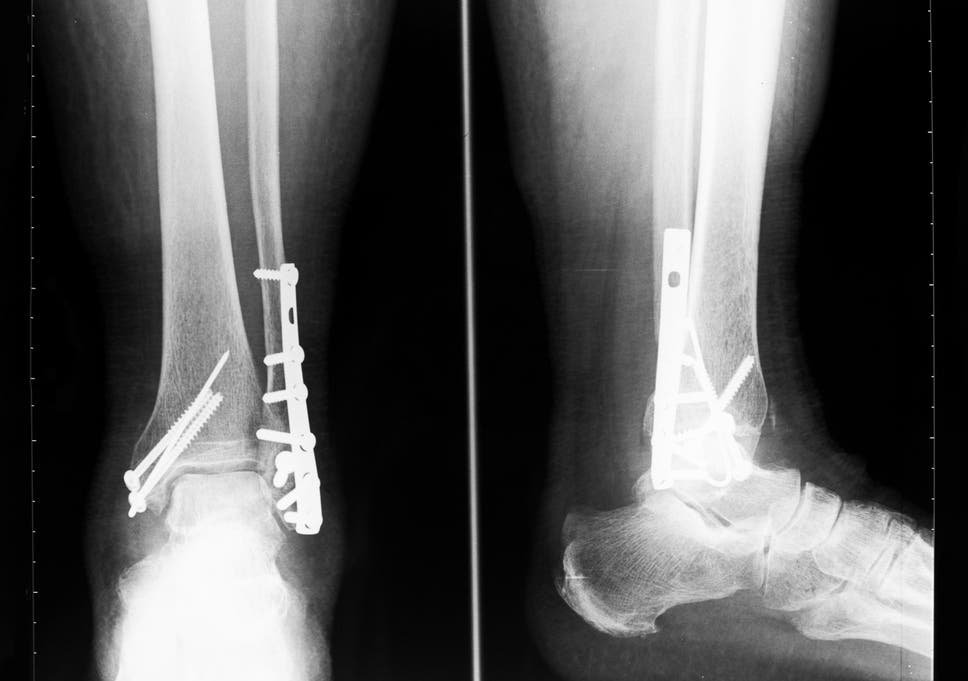
'. David Powers, '., War Without Mercy: Race & Power in the Pacific War p1., Why the Allies Won p 6., Japan's War, p 334., p 444 Random House New York 1970. John Toland, The Rising Sun: The Decline and Fall of the Japanese Empire 1936-1945 p 539 Random House New York 1970. Edwin P. Hoyt, Japan's War, p 356.
Edwin P. Hoyt, Japan's War, p 360. Borch, Fred (2017). Oxford University Press. Pp. 31–32.
Edwin P. Hoyt, p 256. Edwin P. Hoyt, Japan's War, p 257.
Encyclopedia Britannica. Retrieved 2017-08-21.
Archived from on 2006-03-15. Retrieved 2006-03-05. Cleary, Thomas Training the Samurai Mind: A Bushido Sourcebook Shambhala (May 2008).
Mikiso Hane Modern Japan: A Historical Survey, Third Edition Westview Press (January 2001). Zeami Motokiyo 'Atsumori'. Archived from on 2008-02-15.External links and further reading. Oleg Benesch. Oxford: Oxford University Press, 2014.,. 易經道 Yijing Dao, 鳴鶴在陰 Calling crane in the shade, Biroco - The Art of Doing Nothing, 2002-2012, 馬夏 Ma, Xia, et.
Al.,. 'Bushido Arcade' a Contemporary translation of the Bushido. William Scott Wilson, Ideals of the Samurai: Writings of Japanese Warriors (Kodansha, 1982). by Thomas Cleary 288 pages Shambhala (May 13, 2008). Katsumata Shizuo with Martin Collcutt, 'The Development of Sengoku Law,' in Hall, Nagahara, and Yamamura (eds.), Japan Before Tokugawa: Political Consolidation and Economic Growth (1981), chapter 3. K.

Grossberg & N. Kanamoto 1981, The Laws of the Muromachi Bakufu: Kemmu Shikimoku (1336) and Muromachi Bakufu Tsuikaho, MN Monographs (Sophia UP). Hall, John C. 'Japanese Feudal Laws: the Magisterial Code of the Hojo Power Holders (1232).' 34 (1906).
'Japanese Feudal laws: The Ashikaga Code.' 36 (1908):. John Allyn, 'Forty-Seven Ronin Story'., The Regulations of Imagawa Ryoshun (1412 A.D.)., (1701 A.D.). The Message Of Master Gokurakuji — Hōjō Shigetoki (1198A.D.-1261A.D.).The True Story of Saigo Takamori Military History Magazine. Onoda, Hiroo, Trans.
Knights Of Honor Cheats, Codes, HintsYour home of Knights Of Honor Codes and Knights Of Honor Hints Knights Of Honor Cheat CodesKnights Of Honor Cheats PCCheat CodesWhile playing a game, press Enter, then type one of the following codes to activate the corresponding cheat function. Press Enter again to rsume.
Result Cheat Code1,000 Deity, 1,000 Books, 100,000money (huge inflation)bskintiToggle fog of warbsnofogToggle no money modebsraiToggle increased structure damagebsdestroyerAI off for all kingdomsbsnoaiAI on for all kingdoms, including yoursbsaiChange sides to selected nationbsswitchEnemy spies shown on KnightbarshowspiesNo Gameshark Knights Of Honor Hacks found.Get Knights Of HonorFind a great deal on Knights Of Honor atKnights Of Honor Strategy GuideGet help with the Knights Of Honor Strategy Guide at© 2020 Total Cheats. All Rights Reserved.